Weekly Review / Global Textile & Apparel
Weekly Textile Week 32: Export Growth Splits, Green Sourcing and Regional Fashion Trade
Published: August 8, 2026 | Updated: August 8, 2026
Research window: August 2–8, 2026
Five developments from China, Vietnam, South Korea, Argentina and Peru show a textile market moving in different directions: upstream trade remains resilient, sustainability data is becoming commercial infrastructure, retail channels are crossing borders and parts of South America's industry face sharply different outcomes.
The week in one minute
Five regional signals, one diverging textile market.
| Signal | What changed | Why it matters |
|---|---|---|
| China exports | January–July textile yarn, fabrics and made-up products rose 3.9%, while apparel and clothing accessories rose 0.9%. | Upstream textile trade is expanding faster than finished clothing, pointing to a more uneven recovery than the combined export total suggests. |
| Vietnam sourcing | Buyers are tying competitiveness more closely to energy use, emissions, traceability, circularity and supplier data. | Price, quality and delivery remain necessary, but factories increasingly need evidence of how production is controlled. |
| South Korea retail | KOCCA and Hyundai Department Store created a programme to place selected Korean designer brands in overseas retail channels. | Export support is moving beyond promotion toward physical market testing, merchandising and distribution. |
| Argentina employment | A FITA-based report counted 15,468 fewer formal jobs across the textile-related chain in the year to April 2026. | The loss shows that weak activity is reaching labour and operating capacity, not only sales sentiment. |
| Peru trade | Peru Moda LATAM Chile reported USD 31.69 million in commercial opportunities from its August 4 sourcing event. | Peru is using regional B2B access to sell cotton, alpaca, babywear, footwear and accessories as differentiated products. |
Story 1 / 05
China's textile exports are growing faster upstream than in apparel
China exported USD 174.7477 billion of textiles and apparel during January–July 2026, according to the Chinese industry report citing public customs statistics. The combined figure is substantial, but the category split is more revealing.
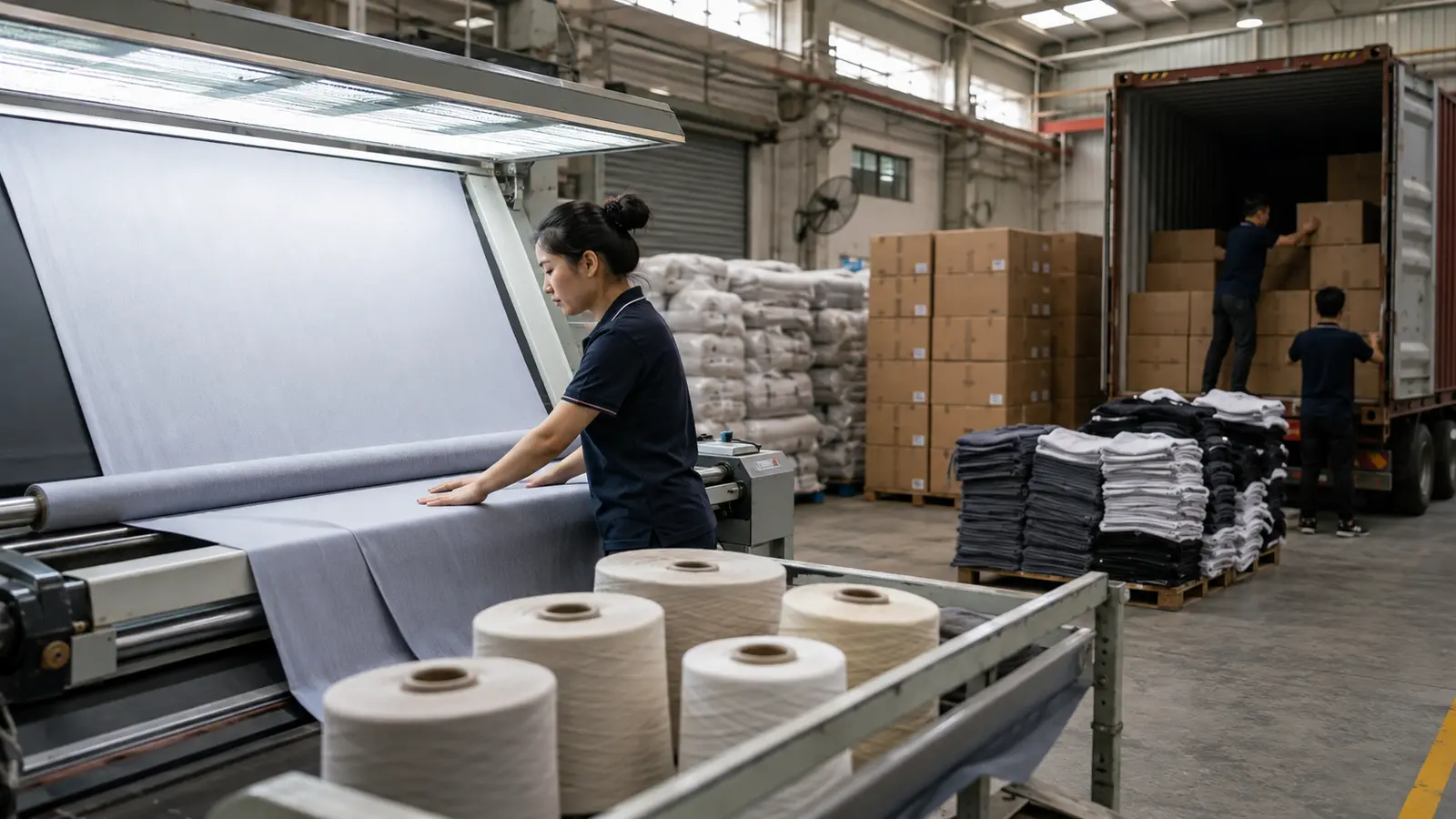
Exports of textile yarn, fabrics and made-up textile products reached USD 85.3446 billion, up 3.9% year on year. Apparel and clothing-accessory exports reached USD 89.4031 billion, up only 0.9%.
In July alone, textile-product exports were USD 12.3459 billion and apparel exports were USD 16.4497 billion. China also imported USD 6.7408 billion of textile yarn, fabrics and made-up products in the first seven months, an increase of 20.7%.
Weekly Textile reading
The combined export headline can hide a widening difference between materials and finished garments. Stronger upstream growth may reflect resilient demand for Chinese yarn, fabric and textile inputs across diversified manufacturing locations, while clothing exports face slower demand, tariff pressure and competition from other garment-producing countries.
Sourcing teams should therefore compare China by product layer rather than treating it as one market: fibre, yarn, fabric, trims, finished garments and branded retail can each move differently.
Story 2 / 05
Vietnam's sourcing advantage increasingly depends on green-production evidence
A Vietnamese report published before Vietnam International Sourcing 2026 says competitive pricing, stable quality and on-time delivery are no longer enough on their own. International buyers also want to understand material origin, energy use, emissions control, traceability and the supplier's ability to improve.
H&M is returning to the sourcing event for a second consecutive year. The article says the group has sourced in Vietnam since the early 2000s and currently works with 42 suppliers and 72 factories connected to more than 60,000 workers. These figures describe an existing sourcing network, not new orders announced this week.
The event is scheduled for September 3–5, 2026 in Ho Chi Minh City and is intended to connect manufacturers with international buyers and distribution groups.
Weekly Textile reading
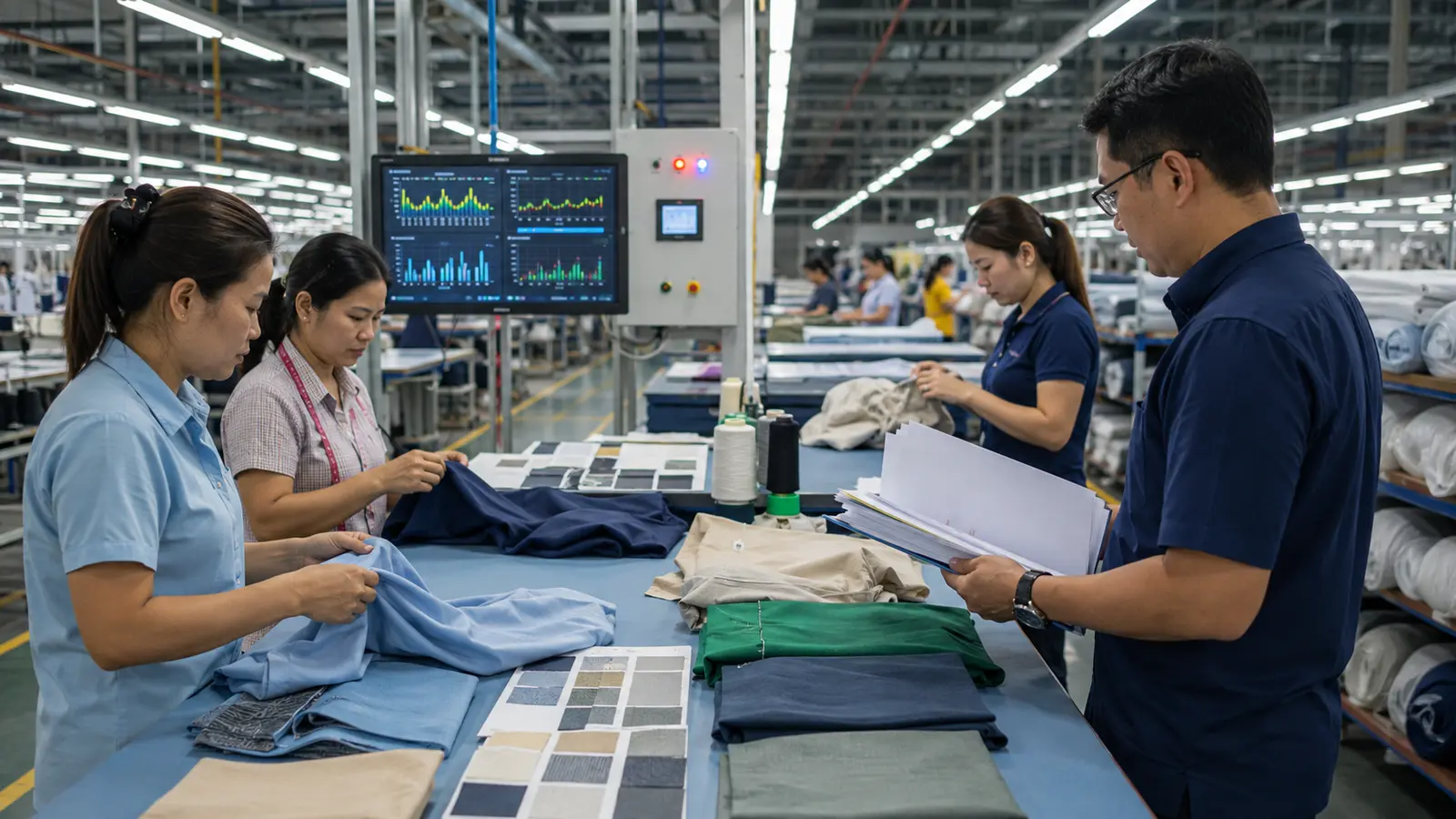
The commercial change is that sustainability data is becoming part of factory capability. A supplier that can show measured energy use, traceable inputs, credible emissions reduction and control over subcontracting can reduce a buyer's compliance risk as well as its environmental impact.
Factories should prepare evidence that can survive scrutiny: energy and water intensity by production line, material and lot traceability, chemical-control records, subcontractor mapping, corrective-action closure and a realistic improvement plan.
Story 3 / 05
South Korea builds a physical overseas retail route for designer brands
South Korea's content agency KOCCA and Hyundai Department Store signed an agreement on August 6 to support small and mid-sized Korean fashion-designer brands in overseas markets.
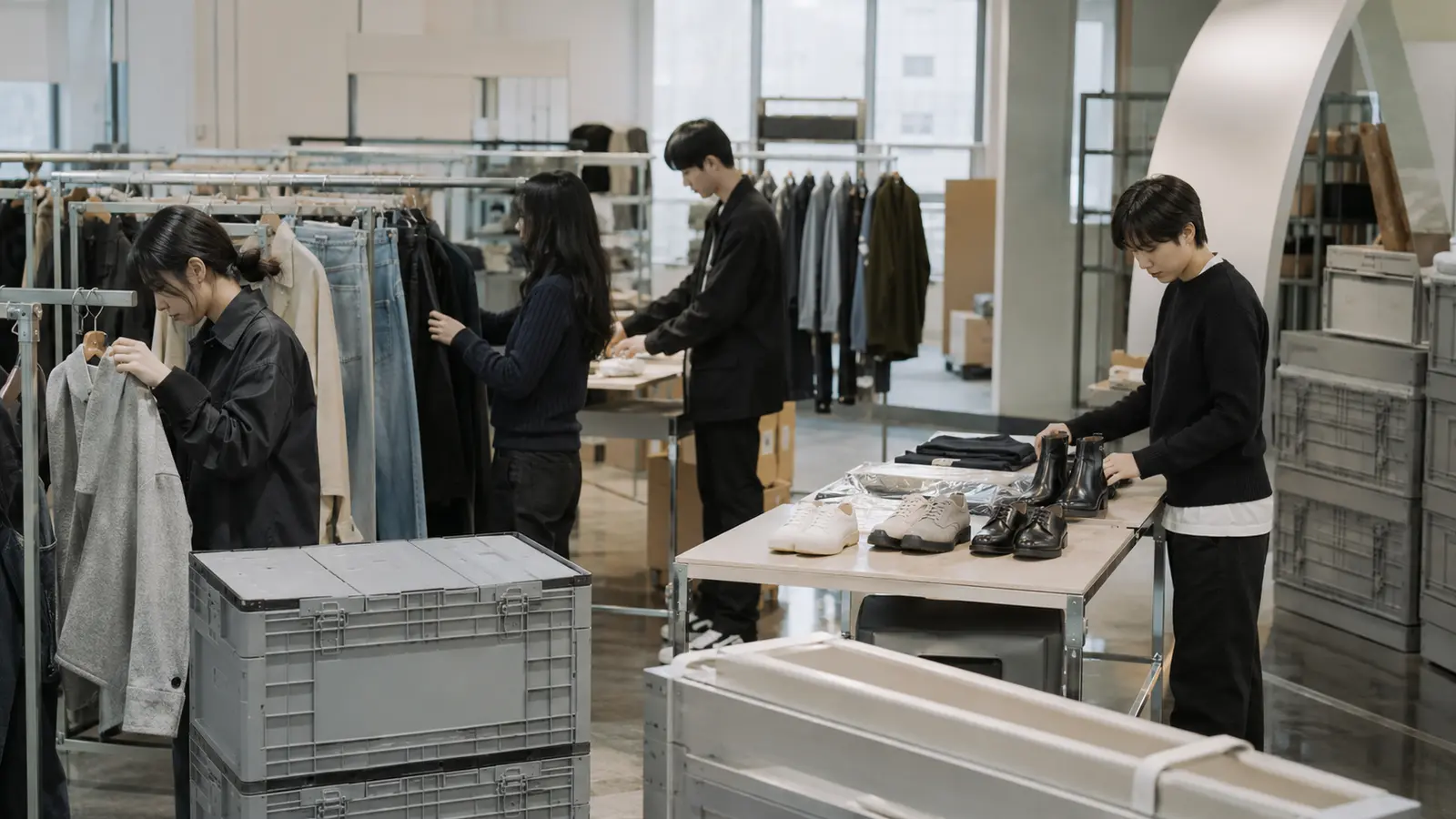
KOCCA will handle brand selection and marketing support, while Hyundai will provide overseas retail infrastructure and store-operating experience. The first group contains five brands, and the programme plans to support 11 brands in total.
The first pop-ups are planned for the Hyundai-operated space on the fourth floor of Shibuya Parco in Tokyo. Brand-by-brand activity is scheduled to begin on September 25, 2026 and run through April 2027, with the partnership later intended to expand to other markets including Paris.
Weekly Textile reading
This is not a national apparel-export statistic. Its importance lies in the mechanism: selected brands get a controlled way to test products, merchandising, price acceptance and customer response in a real foreign retail setting.
For manufacturers, this type of expansion can create demand for smaller, faster and more varied production runs. Suppliers serving emerging brands may need flexible minimums, strong development support, consistent replenishment and packaging suited to retail rather than bulk wholesale.
Story 4 / 05
Argentina's textile pressure is visible in formal employment
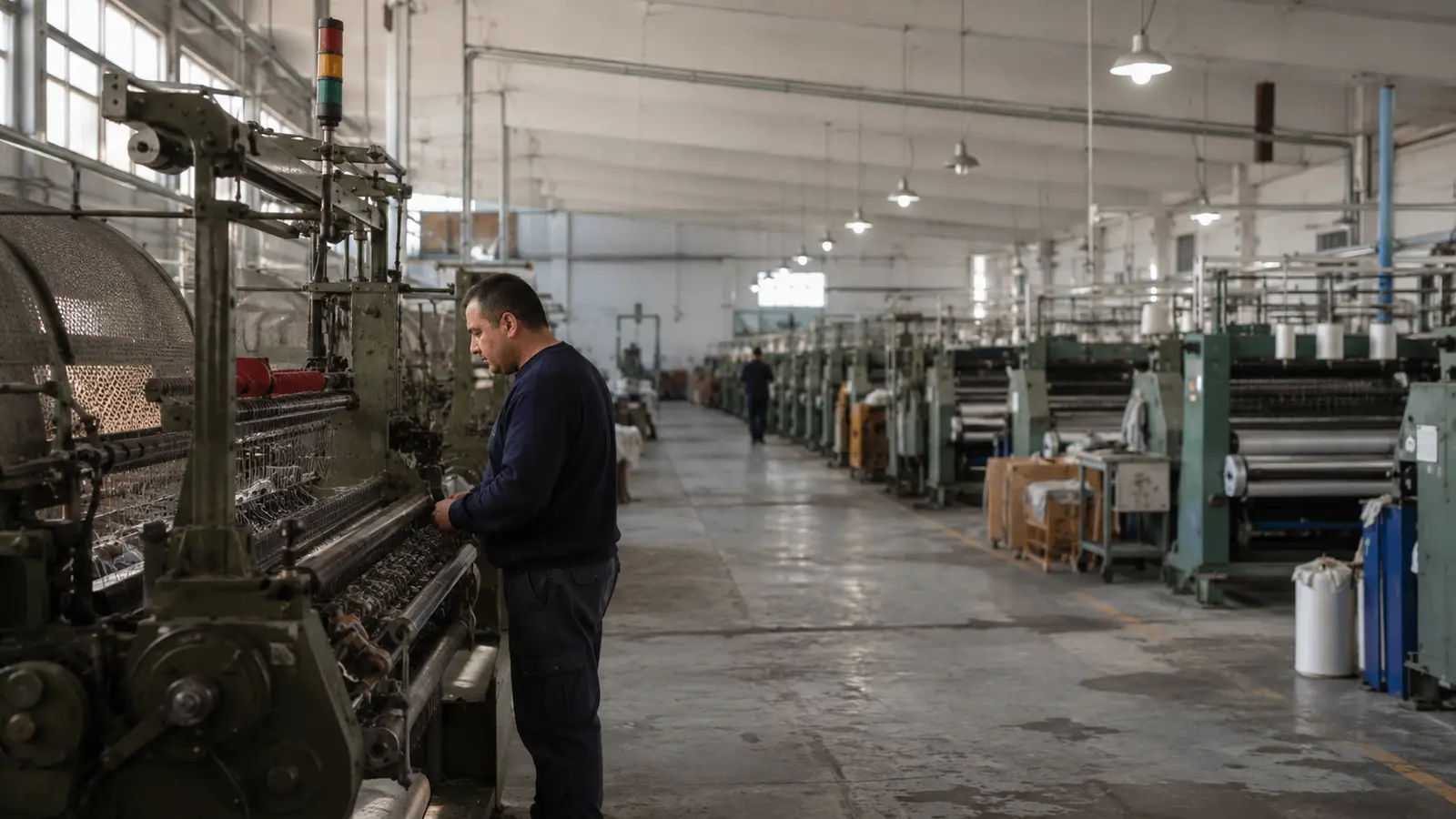
An Argentine report citing the Federación de Industrias Textiles Argentinas said the textile-related chain had 15,468 fewer formal jobs in April 2026 than a year earlier—an average decline equivalent to about 42 positions per day across the period.
Formal employment stood at 95,094 in April, down 1,241 from March and down 15,468 from April 2025.
The period matters. These figures describe a twelve-month change to April 2026; they do not mean 15,468 people were dismissed during Week 32. The affected chain also extends beyond one stage of garment sewing.
Weekly Textile reading
Employment decline is a lagging but serious capacity signal. When companies reduce staff, the effects can extend to maintenance, skill retention, minimum economic production runs and the ability to respond when demand returns.
For international sourcing, Argentina remains more relevant for specialised regional production and brands than for high-volume basic garments. The current pressure increases the importance of checking which capabilities remain active, whether mills can hold lead times and whether a supplier's price reflects sustainable operating volume.
Story 5 / 05
Peru Moda LATAM turns regional access into a USD 31.69 million opportunity pipeline
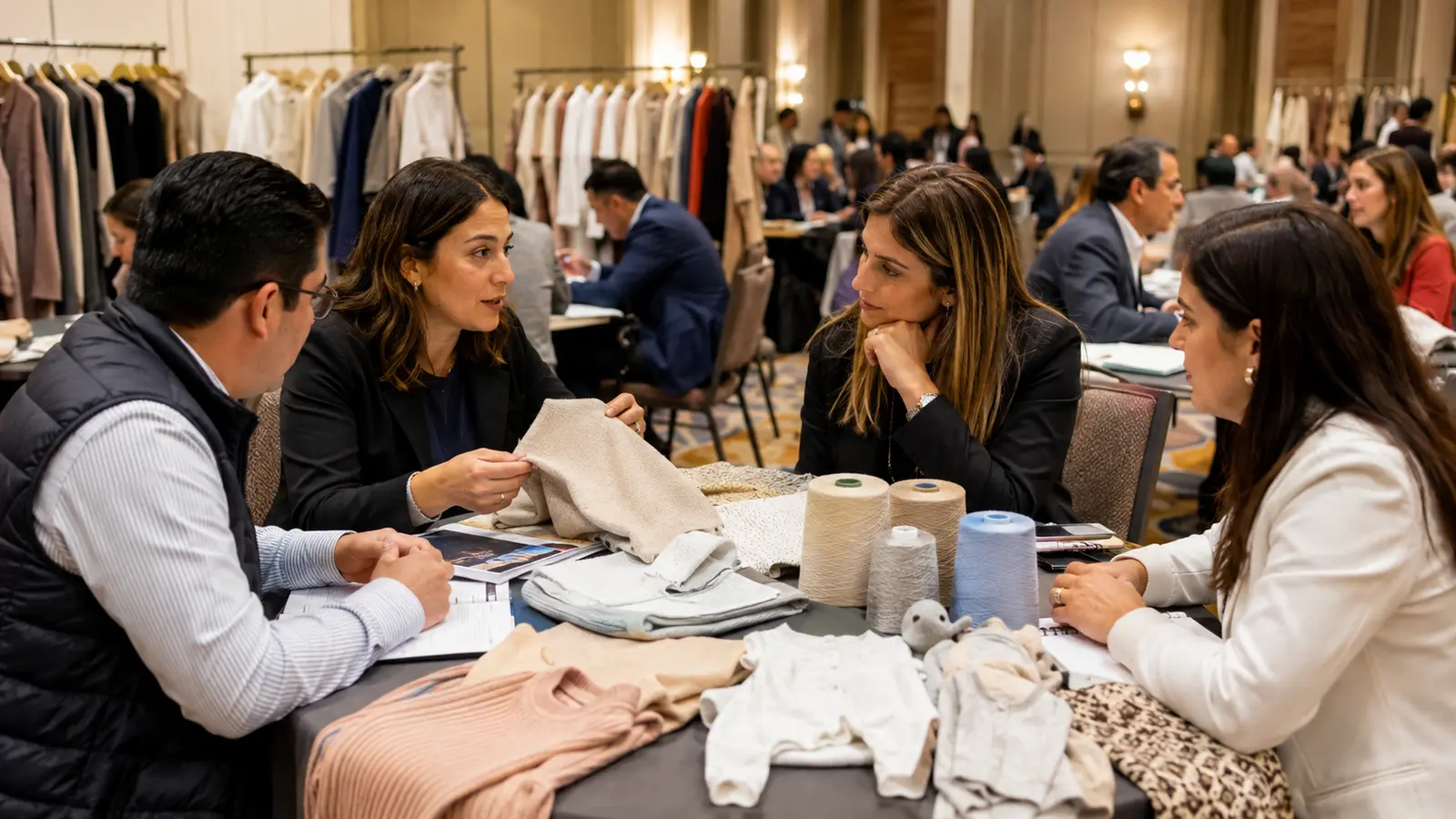
Peru Moda LATAM Chile 2026, held in Santiago on August 4, generated a reported USD 31.69 million in commercial opportunities for participating Peruvian companies.
The event connected 50 Peruvian companies with 167 international buyers from Chile, Brazil, Argentina, Colombia, Ecuador and Bolivia. The offer covered adult and children's cotton garments, babywear, alpaca products, footwear, leather accessories and jewellery.
The wording requires care: commercial opportunities are expected or potential business, not guaranteed orders and not money already received.
Weekly Textile reading
Peru's advantage in this format is differentiation. Pima and other cotton products, alpaca, babywear and smaller-scale full-package capabilities can be presented directly to regional brands and retailers that value material story, quality and closer commercial access.
The contrast with Argentina is notable. During the same week that Argentina's formal textile-employment losses returned to the headlines, Peru reported a strong regional opportunity pipeline. South America's textile market is not moving as one block; industrial pressure and export development are occurring at the same time in neighbouring markets.
Weekly Textile assessment
Week 32's clearest message is divergence:
China
Textile inputs are growing faster than finished-apparel exports.
Vietnam
Sustainability commitments are becoming measurable factory capability.
South Korea
Selected fashion brands are gaining physical overseas retail infrastructure.
Argentina
Industrial stress is reducing formal employment and weakening capacity.
Peru
Regional buyer meetings are expanding a differentiated apparel and fibre offer.
What to watch next week
- Whether China's apparel-export growth accelerates or the gap with upstream textile products widens.
- Which energy, traceability and circularity requirements buyers make explicit at Vietnam International Sourcing.
- Whether Korea's Tokyo pop-ups translate into repeat orders and wider participation beyond the first 11 brands.
- Whether Argentina's later employment and production releases show stabilisation or continued contraction.
- How much of Peru Moda LATAM's USD 31.69 million pipeline converts into signed, shipped business.
Weekly takeaway
Week 32's clearest message is divergence: resilient upstream trade, rising sustainability-data requirements, new cross-border retail routes and sharply different industrial outcomes are unfolding at the same time.
Editorial note: Weekly Textile translates and summarises original local-language reporting. Commercial-opportunity values, programme targets and reported employment changes should not be treated as guaranteed sales, legal advice or investment recommendations.