Weekly Review / Global Textile & Apparel
Weekly Textile Week 30: Tariffs, Energy Pressure, Cotton Supply and New Order Signals
Published: 2026-07-24 | Updated: 2026-07-24
Research window: July 18–24, 2026
Six developments from Bangladesh, Pakistan, India and Vietnam covering US tariffs, industrial energy, government response, cotton arrivals, garment-fair bookings and traceability rules.
The week in one minute
Six separate developments, one regional sourcing picture.
| Signal | What changed | Why it matters |
|---|---|---|
| US tariff | Bangladesh entered the lower 10% additional Section 301 tier; Vietnam, China and Thailand were reported at 12.5%. | Bangladesh gains a relative landed-cost advantage, but ordinary product duties still remain. |
| Bangladesh energy | A spinning mill designed for 10 PSI gas reportedly receives about 1.5 PSI; the wider textile sector continues to lose capacity. | Tariff advantage is less useful when production reliability and conversion costs remain unstable. |
| Government response | BGMEA raised uninterrupted gas and electricity supply with the Prime Minister, who ordered quickly solvable obstacles to be removed. | The next test is execution: whether factories see measurable improvement in pressure, power quality and lead-time reliability. |
| Pakistan cotton | Cotton arrivals at ginning factories were reported 77% above the same point last year. | A stronger early crop flow may ease regional raw-cotton pressure, though arrivals are not the same as final season output. |
| India demand | An Agra ready-made garment fair reported order bookings 35% above last year. | It is a useful domestic demand signal for wedding and autumn-winter categories, not proof of an export-order boom. |
| Vietnam compliance | Vietnam issued a decree prohibiting imports of goods made wholly or partly with forced labour and retaining a ban on used textile and clothing imports. | Origin, labour and supplier-documentation requirements are becoming more formal across Asian supply chains. |
Story 01 / 06
Bangladesh receives the lower US tariff tier
Bangladesh was placed in the 10% additional Section 301 tariff tier under the new United States measure announced on July 23 and applied from July 24. The Bangla report says China, Vietnam and Thailand were placed in the 12.5% tier.
The key word is additional. The 10% charge sits on top of the existing Most-Favoured-Nation duty, which varies by product classification, fibre content and construction. A cotton T-shirt, synthetic blouse and baby garment should therefore not be costed from the headline rate alone.
The same report says the United States is considering a three-year tariff-rate quota for Bangladesh, Cambodia, Indonesia and Malaysia. Qualifying products using US cotton or textile inputs could potentially receive relief from the new Section 301 charge. The mechanism is under consideration, not operational, so exporters should not include it in firm quotations.
Weekly Textile reading
Bangladesh gained a real but limited advantage over suppliers in the 12.5% tier. The practical buyer comparison remains:
normal product duty + new Section 301 charge + material cost + freight + financing + compliance cost + production risk
Story 02 / 06
Bangladesh’s energy problem remains more immediate than the tariff opportunity
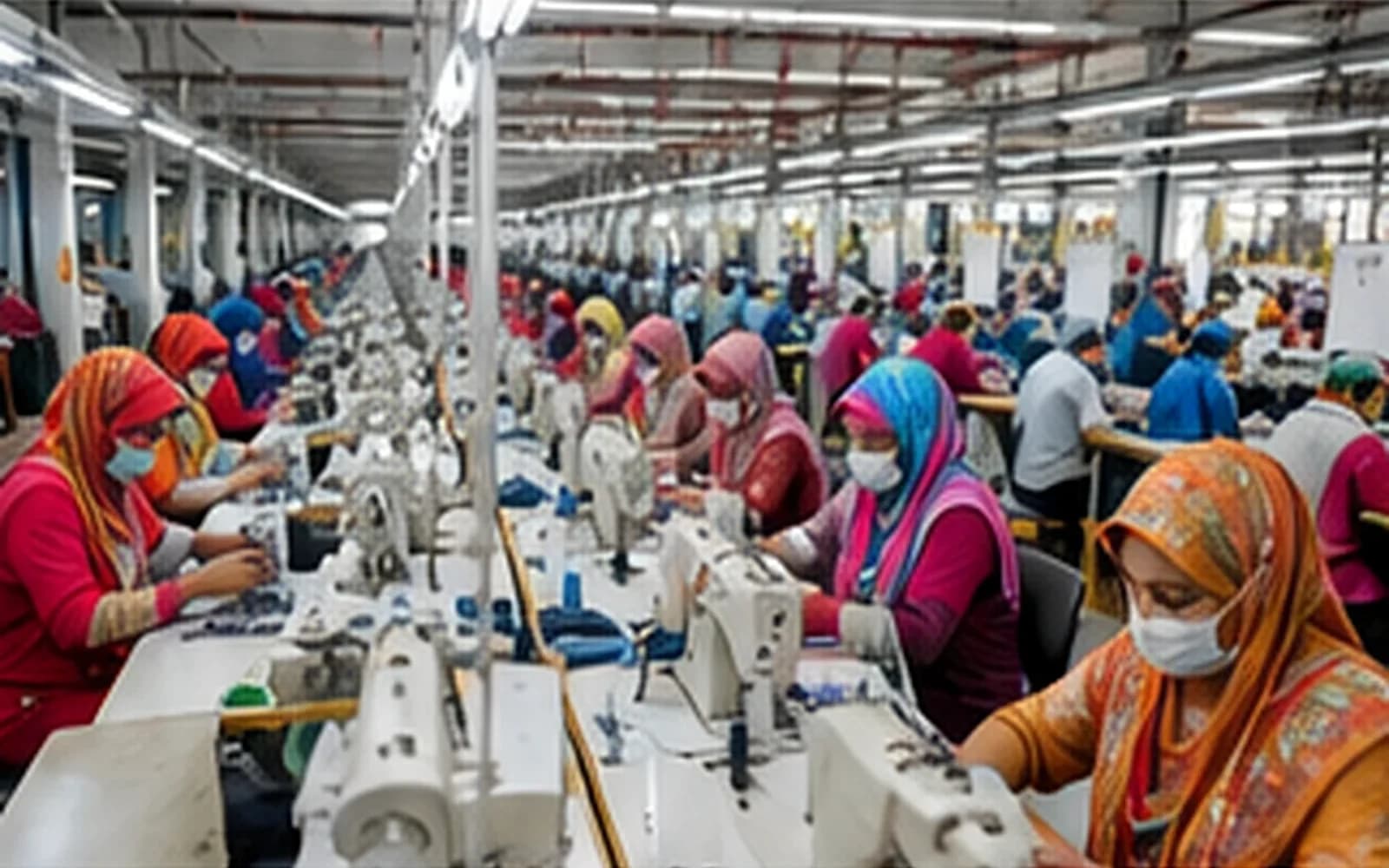
A Bangla investigation described a spinning mill built to operate with 10 PSI gas pressure but receiving an average of only 1.5 PSI. The owner said the shortfall had caused about Tk 450 crore in production losses over four and a half years.
The report cited Bangladesh Textile Mills Association data showing 234 textile mills have closed since 2014, including 114 spinning mills. It also described a sharp operating-cost gap: captive electricity generated with natural gas was reported at roughly Tk 7.5–8 per kWh, compared with Tk 14–15 using CNG.
This is the central contradiction of the week. Bangladesh may gain 2.5 percentage points against several US-market competitors, but factories cannot fully convert that advantage into orders when spinning, dyeing, finishing and sewing face unstable energy supply.
Weekly Textile reading
For buyers, factory selection should include questions beyond FOB price:
- What gas pressure and grid stability did the factory receive during the last 30 days?
- Which operations depend on captive power?
- Is dyeing or finishing subcontracted to a unit facing the same constraint?
- What backup-fuel cost is already included in the quotation?
- How much production capacity is actually usable, not merely installed?
Story 03 / 06
BGMEA takes gas and electricity problems to the Prime Minister
On July 22, a BGMEA delegation met the Prime Minister and raised the need for uninterrupted electricity and gas supply, alongside other accumulated problems facing the garment industry. The Prime Minister directed the relevant authorities to remove obstacles that can be solved quickly, while acknowledging that longer-standing problems will require more time.
This meeting matters because it connects the energy problem directly to apparel competitiveness rather than treating it only as a general utility issue.
Weekly Textile reading
The industry now needs measurable follow-through rather than another statement of concern. Useful indicators would include:
- average industrial gas pressure by major production zone;
- hours of voltage interruption and load-shedding;
- time required to resolve new or expanded industrial connections;
- output recovered at spinning, dyeing and finishing plants;
- reduction in diesel, CNG and LPG dependence.
Without those numbers, buyers cannot know whether the policy response is improving actual delivery reliability.
Story 04 / 06
Pakistan reports a 77% jump in early cotton arrivals
Pakistan’s ginning factories had received the equivalent of 527,900 bales by July 15, up 230,149 bales, or 77%, from the same point last year, according to the Urdu report. Sindh’s arrivals were reported 114% higher and Punjab’s 39% higher.
The report also said textile mills had purchased 444,379 bales and that the early supply news contributed to a Rs 300 per maund decline in local cotton prices after a recent rise.
The correct interpretation is important: this is an early-season arrival report, not a final national crop estimate. Weather, quality, pest pressure, harvesting pace and regional movement of seed cotton can still change the season’s outcome.

Weekly Textile reading
For Bangladesh and other cotton-importing textile countries, stronger Pakistani arrivals can influence regional sentiment even before they materially change import offers. Buyers should watch:
- staple length and contamination, not only bale volume;
- whether the price decline persists after the first arrival surge;
- yarn-mill buying pace;
- weather in Sindh and Punjab;
- the gap between domestic Pakistani cotton and imported cotton.
Story 05 / 06
Agra garment fair reports 35% stronger order bookings
An autumn-winter ready-made garment fair in Agra reported order bookings 35% above last year. The Hindi report highlighted wedding-season demand, including six-in-one suits for men and muslin and Chanderi-silk garments for women.
This is a useful demand signal because it reflects retailer and wholesaler buying behaviour in a large apparel market. It should not, however, be confused with national apparel-export growth. The fair is a domestic and regional order indicator.
Weekly Textile reading
The signal is relevant to manufacturers developing small or mid-sized seasonal collections:
- buyers are responding to multi-use and occasion-led products;
- fabric story and visual differentiation matter more than commodity basics;
- autumn-winter booking can strengthen before broad consumer data improves;
- wedding and festive demand may support shorter development cycles and more frequent replenishment.
Story 06 / 06
Vietnam formalises forced-labour and used-textile import restrictions
Vietnam’s government issued Decree 292/2026/NĐ-CP on July 22, detailing prohibited exports and imports. The Vietnamese government report says the prohibited-import list includes used textiles, footwear and clothing. It also prohibits products or goods extracted, produced or manufactured wholly or partly using forced labour, in line with relevant international commitments.
This is not an apparel-export order story, but it is an important supply-chain governance development. Asian manufacturing countries are increasingly formalising the same labour-origin and product-traceability questions that brands face in the United States and Europe.
Weekly Textile reading
Factories and traders should strengthen documents connecting:
- raw-material supplier;
- country and region of origin;
- yarn and fabric lot;
- subcontracting location;
- worker and recruitment records;
- purchase order, cutting lot and shipment.
The commercial direction is clear: traceability is moving from a sustainability presentation into a market-access requirement.
Weekly Textile assessment
Week 30 did not produce one simple bullish or bearish message. It produced six connected signals:
Bangladesh tariff
Bangladesh gained a relative US tariff advantage, but not general duty-free access.
Bangladesh energy
Energy remains the immediate production bottleneck, especially upstream in spinning, dyeing and processing.
Government response
The government has acknowledged the garment industry’s utility constraints, but the market now needs execution data.
Pakistan cotton
Pakistan’s early cotton flow improved sharply, which may soften regional raw-material sentiment if quality and later arrivals hold.
India demand
India showed a positive seasonal order signal in a domestic garment fair, especially for occasion-led products.
Vietnam regulation
Vietnam tightened formal import controls around forced labour and used textiles, reinforcing the movement toward auditable supply chains.
What sourcing teams should do next week
- Recalculate US landed cost style by style; do not use one average apparel-duty assumption.
- Ask Bangladesh suppliers for actual usable capacity under current energy conditions.
- Track Pakistan cotton quality and market prices after the early arrival surge.
- Watch whether India’s stronger fair bookings appear in wider retail and production data.
- Strengthen origin and labour documentation before buyers request it.
- Keep proposed tariff relief separate from active customs treatment.
Editorial note: Weekly Textile translates and summarises original local-language reporting. The analysis is for market intelligence, not legal, customs or investment advice. Verify product classification, shipment date, origin rules and applicable regulations before commercial decisions.