News Analysis / Weekly Textile Week 26
Weekly Textile Week 26: Bangladesh Mill Stress Raises Yarn and Knitwear Cost Questions
Published: 2026-06-27 | Updated: 2026-07-01
Research window: June 21-27, 2026
Page format revised July 10, 2026; reporting not materially changed.
Five-number summary
Main analysis
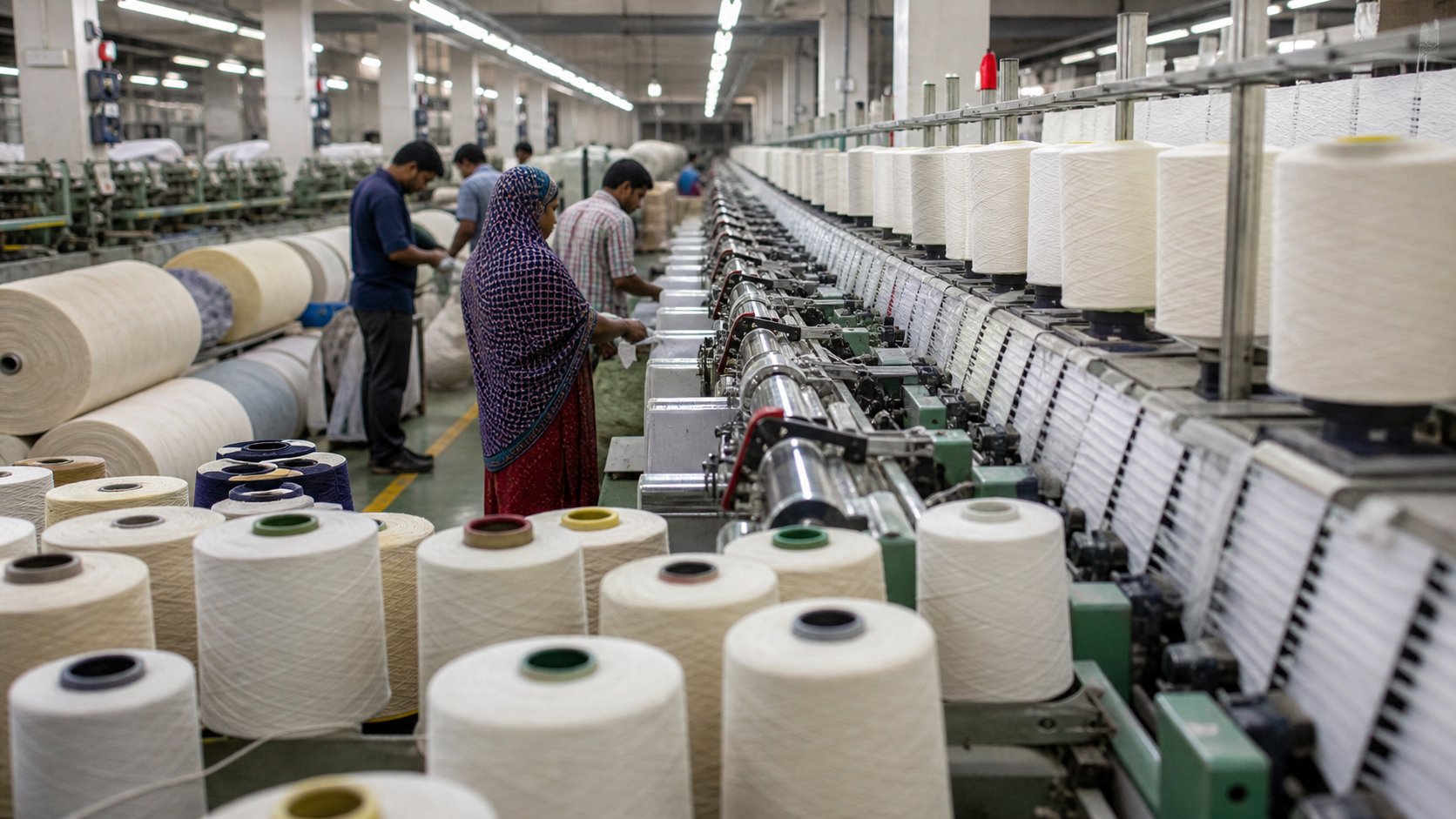
Bangladesh's textile supply chain moved into sharper focus in the final week of June as fresh reporting showed pressure building inside the country's spinning, weaving and dyeing base, the part of the industry that sits behind many knitwear and apparel-costing discussions.
The Business Standard reported on 25 June that the country's textile sector, estimated at $23 billion, is under strain from gas shortages, higher energy costs, incentive reductions, higher interest rates and lower utilisation. The report said 234 yarn and fabric mills have shut since 2019 and cited industry concerns over local value addition falling as more yarn and fabric are imported.
Sources: The Business Standard.
The same week, TBS reported that Apex Spinning and Knitting Mills announced an indefinite temporary layoff following labour unrest, affecting about 5,000 employees and workers. The company-specific case added a visible production-continuity signal to an already difficult mill backdrop.
Sources: The Business Standard.
For knitwear costing, the issue is not only whether yarn is available. It is whether yarn booking, dyeing capacity, fabric width, GSM, finishing schedule and price validity still match the assumptions used when a T-shirt, polo, fleece or rib program was first costed.
Regional competition also moved during the same window. On 21 June, TBS reported that Indian textile exporters expected the India-UK trade agreement to improve their position against Bangladesh and Pakistan in the UK market. Fibre2Fashion later reported that India's textile ministry had opened a roadmap process aimed at lifting textile and apparel exports from about $37 billion to $100 billion by 2030.
Sources: The Business Standard; Fibre2Fashion.
Cotton-cost discussion added another layer. Economic Times coverage on 26 June framed India's temporary cotton import-duty relief as helpful for near-term cost pressure but not enough to solve deeper competitiveness issues around cotton quality, productivity and manufacturing structure.
Sources: The Economic Times.
Official BGMEA export data kept the Bangladesh story in perspective. For July-May FY2025-26, total RMG exports were listed at $35.31 billion, down 3.41% year on year, with knitwear down 4.26% and woven down 2.42%. Bangladesh remains a large apparel base, but the numbers make current yarn, fabric and production assumptions worth rechecking.
Sources: BGMEA.
The Week 26 reading is therefore straightforward: Bangladesh's apparel base is still central, but mill stress, import dependence, factory-level disruption and regional trade moves have made old costing assumptions less reliable.
Costing consequences
Mill pressure
Energy cost, gas availability, finance cost and low utilisation are now the leading background issues for Bangladesh yarn, fabric, dyeing and finishing discussions.
Knitwear costing
Fabric GSM, width, dyeing, finishing and price-validity assumptions need a fresh look when mill utilisation and input costs are moving.
Regional competition
India's UK trade-access momentum and $100 billion export roadmap add pressure to South Asia sourcing comparisons.
Export data
BGMEA's July-May data shows Bangladesh's RMG base remains large, while knit and woven export values were lower than the same period last year.
Desk checks
- Yarn booking validity by count, composition and combed or carded quality.
- Fabric GSM, width, dyeing and finishing assumptions used in open quotations.
- Factory continuity where fabric delivery or production line planning is already tight.
- USD-linked payment terms, local currency sensitivity and South Asia comparison.
- India trade-access updates before UK or Europe-facing programs are finalised.
What to watch
- Fresh yarn booking validity by count, composition and combed or carded quality.
- Dyeing and finishing capacity where gas and utility pressure can change lead time.
- Factory continuity and fabric delivery risk for styles already under quotation.
- USD-linked cost sensitivity, payment terms and South Asia FX comparison.
- India trade-access updates before UK or Europe-facing programs are finalised.
Sources
Is Bangladesh's $23b textile sector edging towards collapse?
Used for Bangladesh mill pressure, closure, utilisation, import and local value-addition context.
Open sourceLabour unrest forces Apex Spinning to shut Gazipur factory, leaving 5,000 workers in limbo
Used for the Apex Spinning temporary layoff and production-continuity signal.
Open sourceIndian textile exporters set to gain ground on Bangladesh, Pakistan under FTA with UK
Used for regional competition and UK trade-access context.
Open sourceIndia targets $100 billion textile exports by 2030, focus on sustainability, FTAs
Used for India's export roadmap and policy direction.
Open sourceIndia charts roadmap to achieve $100 bn textile exports by 2030
Used for the export-roadmap structure, district-led growth, MMF and competitiveness points.
Open sourceCotton duty or competitiveness? The bigger challenge facing India's $190 billion textile industry
Used for cotton-cost pressure, duty relief and competitiveness context.
Open sourceExport Performance
Used for official knit, woven and total apparel export context.
Open source